
In the Sewer line tunneling process, a licensed plumbing professional will first utilize a high-quality, waterproof camera to determine the exact trouble locations as well as the best tunneling route. The tunneling crew will plan the quickest direct route for tunneling to minimize the risk of excavating damaging hardscape or landscaping.
The excavation will start with a vertical access shaft and continue with tunneling horizontally to the damaged pipe under the foundation of the residence, which provides safe access to repair the pipe. Tunnel costs are typically calculated in linear feet and cause little to no disturbance to the premises.
What Every Homeowner Needs to Know About Sewer Line Tunneling
With knowledge of the different types, materials, and methods of sewer line installation services, Masters Touch Plumbing Solutions will provide residents and business owners in McKinney, TX, with more options when making decisions regarding their property.
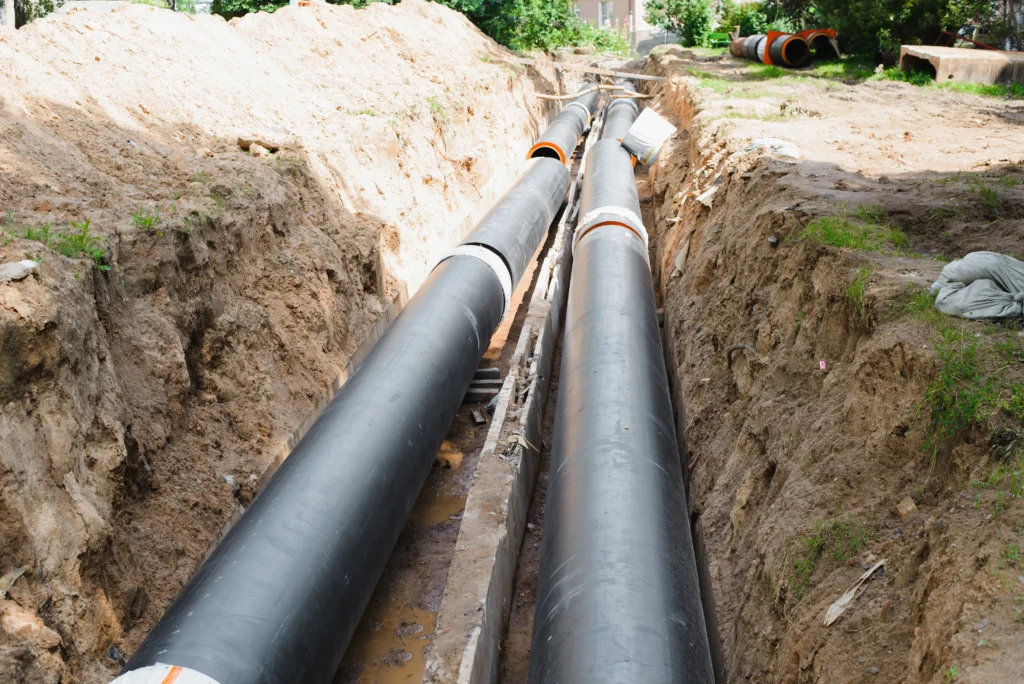
There are different types of sewer lines based on their location and function:
| Types of Sewer Lines | |
| Residential Sewer Line | Adoption of several features of a residential plumbing system to the municipal sewer system. |
| Commercial Sewer Line | A more extensive sewer line for serving businesses or commercial buildings |
| Storm Sewer Line | Heavy-duty sewer lines specifically designed for draining rainwater from streets or properties, preventing flooding. |
There are options for sewer lines made with different materials, some of which will be contrasted:
| Top Materials used! | |
| PVC (Polyvinyl Chloride) | Lightweight and easy to install, resistant to corrosion |
| PEX (Cross-Linked Polyethylene) | Flexible and durable. |
| Clay Pipes | A traditional material that is durable but heavy and prone to root intrusion. |
| Cast Iron | Strong, durable pipes are commonly used in old plumbing systems. |
| Concrete | Extremely durable, often used in multi-family units, municipalities, or large sites. |
Dig Deep: Essential Steps for Successful Sewer Line Tunneling
Dealing with sewer line repairs can be a challenge, no matter who you are, but it is an important part of protecting your property. To protect your property, it is important to understand how to get the job done effectively. In the following step-by-step guide, we convey the importance of proper sewer line tunneling to help you make informed decisions and ensure any work that needs to be done is completed as efficiently as possible.
Use the following guide to sewer line tunneling for homeowners:
- Step 1: Expert video analysis
A qualified plumber carefully inspects your sewer lines with top-quality video equipment before starting sewer line tunneling. A small, waterproof camera is utilized to locate the underground line and assess the condition of the pipe, helping determine the safest and most efficient tunneling route.
- Step 2: Organizing the tunnel’s route
During the sewer line tunneling process, the tunneling team determines the shortest and most direct path from the edge of the foundation to the damaged sewer line. This approach helps eliminate obstructions and minimizes disruption to your driveway, landscaping, or hardscape. Sewer line tunneling costs are typically calculated based on linear footage.
- Step 3: Tunnel excavation
In order to clear the house’s perimeter foundation beam, the crew first digs a vertical access shaft that reaches down to the pipe about 2 feet below the bottom of the foundation beam. Then they dig a horizontal tunnel underneath the foundation, approximately 3 feet by 3 feet in dimensions, for safe access to the damaged pipe.
- Step 4: Expert video analysis
Before beginning the sewer line tunneling process, a licensed plumber will perform a high-quality video inspection of your sewer lines. Using a small, waterproof camera, they locate the exact position of the underground line and document all damaged areas to determine the most effective and safe tunneling approach.
- Step 5: Organizing the tunnel’s route
The tunneling crew will plan the most direct path from the edge of the foundation to the damaged sewer line, which will avoid obstructions and provide the least degree of disturbance to your driveway, landscaping, and/or other hardscape. Tunneling costs are often calculated based on linear footage.
- Step 6: Tunnel excavation
As part of the sewer line tunneling process, a vertical access shaft is first excavated to remove the perimeter foundation beam of the residence. Next, a horizontal tunnel—typically about three feet by three feet—is carefully dug beneath the foundation to access the damaged or failing pipe.
Conclusion
When homeowners are aware of the sewer line tunneling process, they are better positioned to make reasonable repairs. Professionals have the know-how to access and repair broken pipes with the least amount of disturbance to your property by utilizing accurate digging techniques, careful planning of the route, and guided video. Understanding these processes ensures that when the time comes to repair the sewer line, you are prepared, knowledgeable, and ready to protect the landscaping and the foundation of your home.
FAQS
What is sewer line tunneling (or under-slab tunneling)?
It’s a method where a small tunnel is dug under the concrete slab to access and repair or replace sewer lines instead of breaking through the slab itself.
Will tunneling damage my home’s foundation?
If improperly executed, yes. Poor backfill or shifting soil can cause voids under the foundation, leading to settlement issues.
Why select tunneling instead of traditional excavation?
Tunneling reduces disruption to landscaping, driveways, and buildings, so it is typically less invasive and a more popular option for fixing lines under buildings.
How long will sewer line tunneling take?
Most residential projects take a few days to finish, depending on depth, length, and complexity.
How much does sewer line tunneling cost?
Cost is dependent on the length of tunnels, the type of dirt, and the repair options needed for the pipe. Contractors usually will give you a proposal based on linear footage.